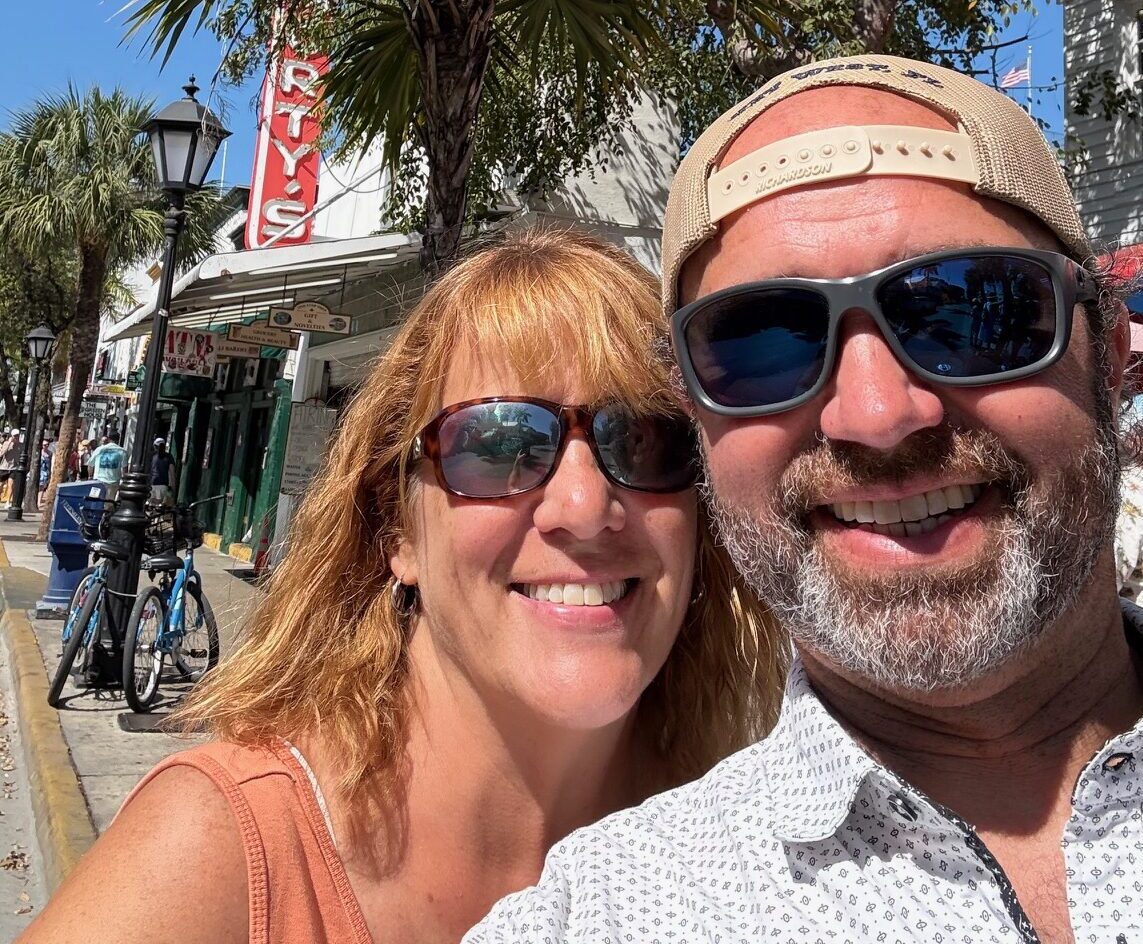
My wife has a superpower.
When we’re with the kids, or out with friends, and the usual question comes up, everyone does the same thing.
Where should we eat?
What should we do next?
What’s the plan?
And almost on cue, someone says, “Whatever you want to do.”
It sounds harmless. Easygoing, even. Like generosity. Like flexibility. Like no one wants to make a big deal out of anything.
But that’s not what it is. What it really means is: “I don’t want to choose. You choose.”
And my wife does.
She picks the date. She picks the restaurant. She picks the next stop. She picks the plan. She does it with the information she has, knowing full well not everyone may love the decision. But she tries to accommodate everyone’s needs (man, how she tries). And almost every time, the rest of us feel the same thing.
Relief.
That’s the part I keep coming back to.
Not the choice itself. The relief that follows it.
Because someone was willing to absorb the burden of deciding.
I don’t think most of us appreciate how heavy that burden can be. We act like choice is power, and sometimes it is. But choice is also responsibility. Choice is risk. Choice means owning the outcome if the meal is bad, the drive is too long, the place is closed, the tour boat to Yelapa is sketchy (that was mine), or the vibe is off.
That’s why so many people avoid it.
“Whatever you want to do” is often less about being agreeable and more about escaping responsibility. It is a small surrender disguised as kindness.
When my wife and I were in the early years of our marriage, I deferred to her all the time. I did this thinking it was the gentlemanly thing to do. “I’ll go wherever you want to go. I’ll eat whatever you want honey.”
But I’ve learned over the years that I was doing the easy thing and deferring the burden to her. And what a burden it was. Sadly, I was a bit immature in those days (more than today at least) and didn’t understand how a relationship prospers.
These days I’m much better about deciding. When I decide things and tell her what I think we should do, I’m showing love. I cannot tell you how much she appreciates that I can choose things as well.
I see older couples in this position where (most of the time) the man has deferred to his wife for 40…sometimes 50 years. I see the smile from the woman that hides the fact she is five seconds away of pushing him off a cliff.
In small doses, not choosing is fine. We all do it.
But this week I’ve been wondering if this “not choosing” habit says something much bigger about where we are headed.
Choice Overload
Because we are moving into a world with more options than ever. More recommendations. More summaries. More answers. More routes. More tools. More content. More variations of everything.
AI is accelerating all of it.
Need five ideas? Here are fifty.
Need a plan? Here are ten versions.
Need a headline, an image, a strategy, a meal plan, a travel itinerary, a life recommendation? No problem.
The machine is ready with options. It sounds like freedom. But it may not feel like freedom at all. It may feel like exhaustion.
Because the more options we have, the more valuable the person becomes who can say, clearly and calmly, this is the one.
Sheena Iyengar, the Columbia Business School professor best known for her work on choice overload, has spent years showing that people do not necessarily benefit from having more options. Her most famous “jam study,” conducted with Mark Lepper, found that larger assortments attracted more attention, but smaller assortments were far more likely to produce action. In other words, abundance may look appealing at first, but too much choice often makes people less likely to decide at all.
Iyengar has used that same idea to describe what some call the “Chinese Restaurant Paradox”: when diners are handed an enormous menu, many of them don’t experience freedom. They experience fatigue. So when a restaurant puts a short, curated list of specialties up front, people often feel relieved to choose from it. The lesson is simple but easy to miss: people say they want unlimited options, but in practice they often prefer a trusted filter.
And yesterday, my wife and I had dinner with the incomparable Andrew Davis. The server gave us three double-sided pages for the menu. Then, to our relief, went through his recommendations. Guess what? We chose all his recommendations.
Note to marketers: fewer choices will result in more buyers.
The One Who Decides
And now…back to my wife.
I believe my wife is the future. In this age of AI, an age of unlimited choices, the people who flourish will be the ones who can turn endless options into clear choices.
For years, we thought the valuable people would be the ones with the most answers. The fastest. The most productive. The people who could make the most things.
But AI is changing that math.
When everyone has access to more ideas, more tools, more drafts, more strategies, and more ways to do almost anything, the advantage shifts. It shifts toward the person who can look at all of that possibility and say, calmly and clearly, this is the one (ala Rick Rubin).
That is not a small skill. That is leadership.
Maybe that is one of the great human skills of the next decade.
Not just creating. Not just knowing. Choosing.
Maybe the people who matter most in the next chapter will not be the ones who produce the most. They will be the ones who can absorb the burden of decision without passing it back to the crowd. The ones who can turn noise into direction.
That is what my wife does in our small everyday life.
She chooses. And the rest of us breathe easier.
The more I think about it, the more I wonder if that is where this whole thing is headed.
In a world of endless options, the people we trust most may not be the ones who give us more. They may be the ones who help us finally decide.
And…just for fun, some practical advice for me and you…
In the age of AI, becoming the one who decides may require a few simple habits: make more small choices, use AI for options instead of answers, stop waiting for perfect information, and remember that choosing gives other people relief.
About the author

Joe Pulizzi is founder of multiple startups including The Tilt and is the bestselling author of ten books including Content Inc. and Epic Content Marketing, which was named a “Must-Read Business Book” by Fortune Magazine. His latest book is Burn the Playbook: Are You Made for More? Build a Life on Your Terms.