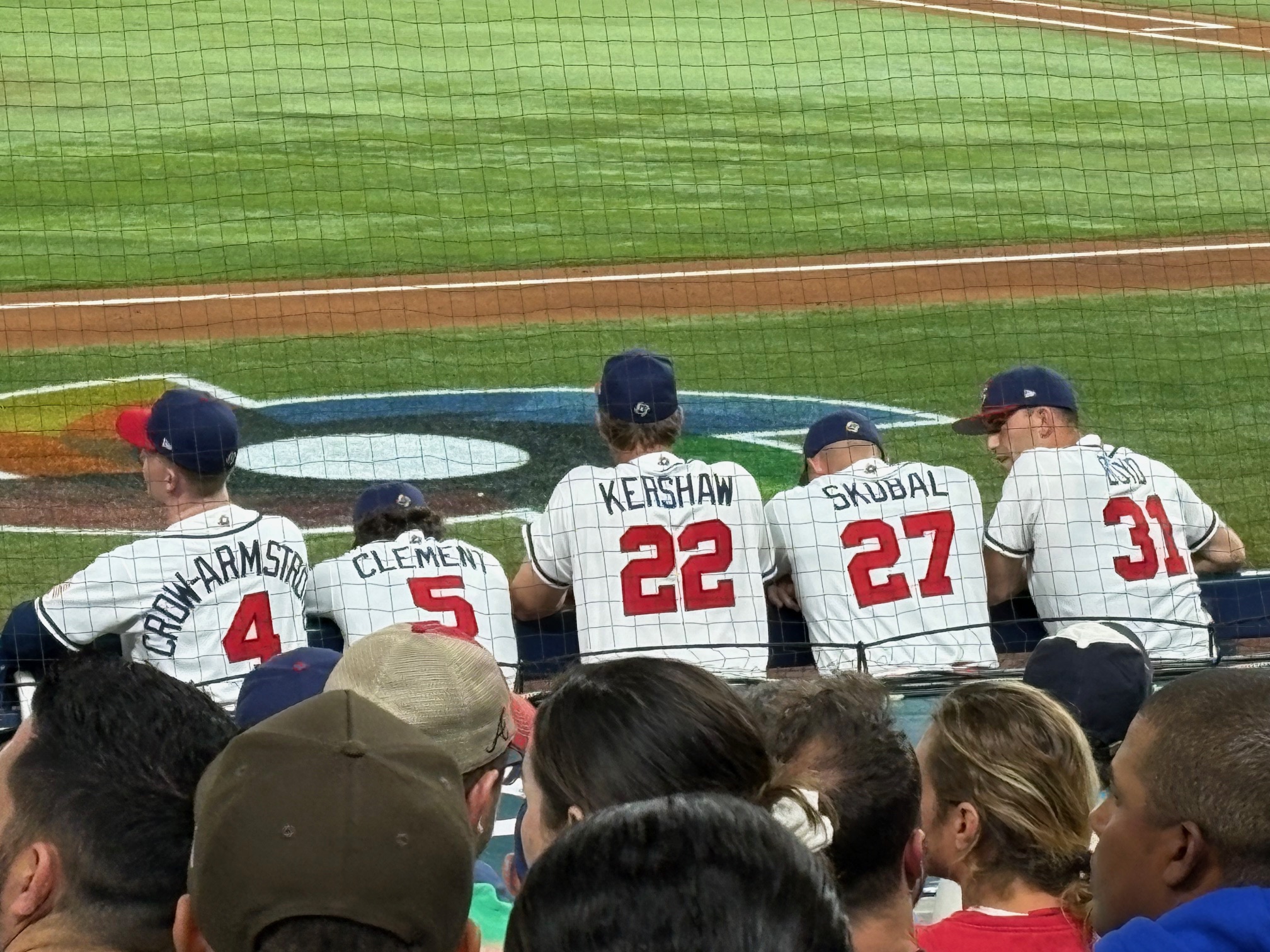
On Wednesday night, I sat in LoanDepot Park in Miami with my son and watched something I didn’t expect.
A World Baseball Classic championship game. Team USA vs. Venezuela. My son and I were there with our Team USA hats, wearing the red, white and blue, cheering on what we thought was the better team.
But after sitting through three hours of baseball, and then into the championship ceremony, I realized that the better team did win…and that team was not from the USA.
Not better in talent necessarily, but better in something else entirely.
They Were Playing for Something Different
When Venezuela closer Daniel Palencia struck out Team USA’s Roman Anthony to record the final (and winning) out, the Venezuelan players collapsed.
Not celebration. Not relief. They just broke.
I saw the entire infield drop to their knees, hug the ground and cry.
You could feel that this wasn’t just a win. This was the biggest moment of their lives. This was, in that moment, everything to them.
The Venezuelan fans, who easily made up most of the stadium, were singing, dancing, crying. It felt like the biggest night of their lives.
I stood there watching, my arm around my son. We were both heartbroken…but after watching that game and the display put on by Venezuela, the only word I can come up with is grateful. Grateful to have been there to see it in person, with my son, on a very special day.
Team USA Didn’t Lack Effort
Let’s be clear. Team USA wanted to win. They competed. They cared. They showed up.
But something felt different. Different throughout the entire tournament.
There were stories leading up to the game about pitch counts, usage limits, contract concerns. Players managing risk. Teams protecting assets. General managers calling the Team USA manager to make sure he was using their players correctly.
While I can’t point a finger at any particular one (although I’m looking at you Tarik Skubal), whether every detail is true doesn’t really matter.
Because the outcome looked like this: One team was playing free. The other team was managing something.
Constraints Change Everything
This is the part I can’t stop thinking about. Team USA didn’t lose because they didn’t want it enough. They lost because they had more to protect.
Contracts. Careers. Sponsorships. Long-term value. Organizational pressure.
All reasonable. All understandable. But it changes how you play.
It changes:
- The risks you take
- The decisions you make
- The way you show up in the biggest moments
If Team USA had no constraints, the Cy Young award winner would have been pitching the championship game. There would have been no issues with using the closer.
As a side note, Team Japan, the reigning World Baseball Classic champion, were knocked out by Italy in the quarterfinals. For the tournament, Shohei Otani decided not to pitch to prepare for his dual role (pitching and hitting) for the LA Dodgers this year. So…it’s not just Team USA.
When you have something to lose, you don’t operate the same way.
I’ve Lived This Myself
There was a time when I was writing every week, building an audience, growing a business.
And then we started landing some big sponsors. No one ever told me what I couldn’t say. But I knew.
I knew who was paying. I knew what they cared about. I knew what might make things uncomfortable.
And even if I still believed everything I wrote…I was thinking about it.
Good Intentions…Real Constraints
The same thing happened when we built Content Marketing World.
We wanted the best event possible. But “best” came with layers:
- Sponsors to support
- Audiences to serve
- Representation to balance
- Expectations to meet
All good things. All necessary. All constraints. I always said it was about the audience experience but we had to manage so many other issues at the same time.
And those constraints shape decisions whether you admit it or not.
What Happens When They’re Gone
Today, that’s mostly gone for me.
No sponsors to protect. No program to balance. No one to keep happy (except my family).
And here’s something I didn’t quite expect. I think I’m doing the best writing of my life (although you should be the judge of that, not me). Not because I suddenly got smarter. Not because I figured out some new system. But because I’m not managing anything anymore.
Maybe best said this way: “I have no Fs to give anymore.” I have the freedom to write what I want without any repercussions (except for my family 😉).
Back to That Night in Miami
That’s what I saw on that field. One team playing with nothing in the way. Another team playing with a lot in the way.
And it made me rethink something I’ve believed for a long time.
Maybe it’s not about wanting it more.
We love to say: “How bad do you want it?” I’m not sure that’s the right question.
A better question might be: What’s quietly holding you back that you’ve accepted as normal?
Because most people I know who are struggling aren’t lazy. They’re not untalented.
They’re managing things:
- Approval Saying what they think their boss, their audience, or their clients want to hear…instead of what they actually believe…or For those job seekers, filling out applications and sending resumes…waiting to get picked instead of creating their own opportunity.
- Expectations Staying inside the role they’ve been given…even when they’ve clearly outgrown it.
- Risk Not launching the thing, not sending the email, not making the call…because it might not work.
- Perception Editing themselves so they don’t look foolish, controversial, or “too much” in front of others.
- Stability Holding onto what’s comfortable…even when they know it’s no longer moving them forward.
And all of these little things add up into living a life that’s just not quite what we thought it would be.
The Real Tradeoff
At some point, you have to decide what you’re protecting. Not in theory. In real life.
- The job you don’t love…but it pays well and feels safe
- The business idea you keep talking about…but haven’t actually launched
- The article, podcast, or post you softened…because you didn’t want the backlash
- The email you didn’t send…because you weren’t sure how it would land
- The opportunity you passed on…because the timing wasn’t “perfect”
None of these feel like big decisions in the moment. But stack enough of them together…and something changes.
You start playing a little more careful. You hedge a little more. You say a little less of what you actually think. And over time that becomes your default. Everything becomes safe…and when everything is safe, we stop growing.
I’ve been on both sides of that.
I’ve written when I knew exactly who might be upset if I pushed too far. I’ve made decisions thinking about sponsors, partners, and expectations.
And I’ve written the way I write now…with none of that in the way. If I’m being honest…I don’t think I ever did my best work when I had something to protect.
One Question Worth Asking
So here’s the only thing I’ll leave you with:
If you removed just one constraint from your life or your work…what would change?
Not everything. Just one.
And take it from me. Sometimes removing just one restraint in your life changes everything about yourself moving forward.
Life is short. Go live it.
About the author

Joe Pulizzi is founder of multiple startups including The Tilt and is the bestselling author of ten books including Content Inc. and Epic Content Marketing, which was named a “Must-Read Business Book” by Fortune Magazine. His latest book is Burn the Playbook: Are You Made for More? Build a Life on Your Terms.