
I’ve been thinking a lot about assets this week.
Part of that is because I’ve been helping work through the assets of some family members. Nothing massive or dramatic, but important stuff. Making sure everything is where it needs to be so they have the money they need one year, three years, five years, and beyond. Property, stocks, bonds, retirement accounts, taxable accounts. You know the drill.
It’s not exactly a joy, but I don’t dislike it. There’s something grounding about it. You look at what exists. You figure out what it’s worth. You try to protect it. You make sure it can do what it is supposed to do.
At the same time, I’m celebrating an asset anniversary of my own.
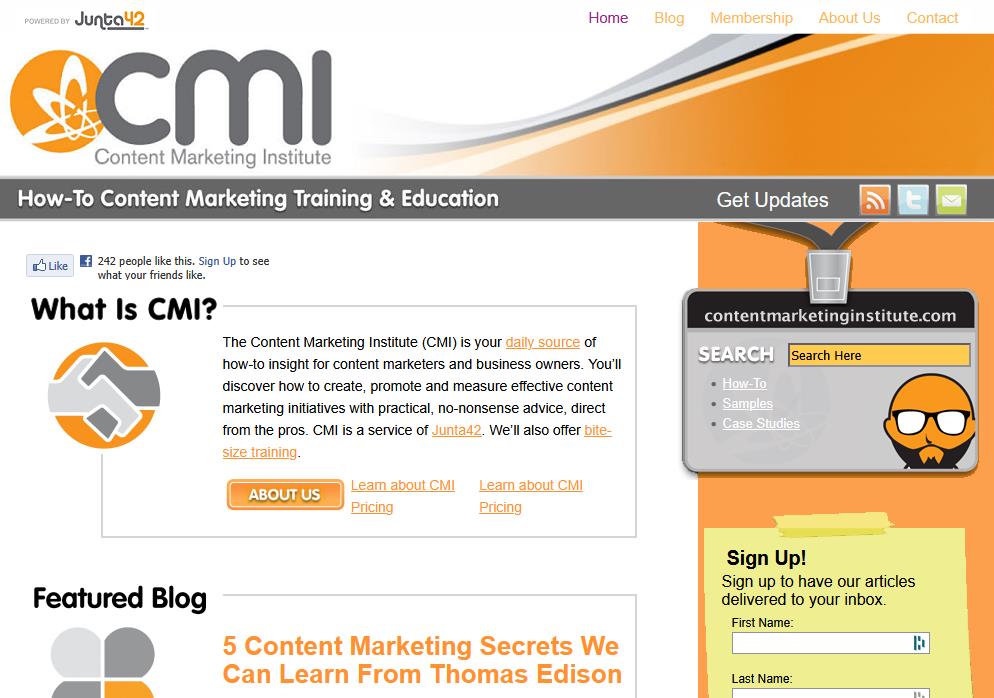
June 1, 2016, was the date we sold Content Marketing Institute. I’ve started and sold three companies in my life, but CMI was the one that changed everything. My wife and I started what became CMI in April of 2007. In 2008, I set the goal to sell it. Years later, when CMI and Content Marketing World had grown enough to hit the financial number we had in mind, we sold.
It was a dream come true. In some ways, it’s still hard to believe it happened.
But here’s the thing I keep coming back to. CMI was not just a company. It was an asset. A real asset. An audience. A database. A brand. An event. A trusted relationship with a very specific group of people.
And that is where the opportunity is right now.
The Gift We’ve Been Given
Last week, I wrote about the growing scarcity of human content. AI content is slowly taking over, and at some point, it will become the majority of what we see, read, and ignore. That means it’s going to get harder and harder for human content creators to break through.
But, and this is a big but, we have been given a gift. The gift is that we know this is coming. We have time to do something about it. I don’t know exactly how much time, but my gut says it’s more than 12 months and less than 36 months.
Here’s what I wrote last week:
“We have a limited window to build something that lives outside the algorithm.
That might be a newsletter. It might be a podcast. It might be an in-person community. It might be a private group, a book, a research series, an event, or something else entirely. Hopefully, if done right, having one of these things means someone or a group of people trusts you.
Because in a world where synthetic content is everywhere, another person trusting you becomes the moat.”
That’s the opportunity. Right now, today, we have a chance to build an asset. Not just content. Not just posts. Not just engagement. An asset.
In a few years, I believe it will be extremely difficult to build a media asset based on human trust. Not impossible, but much much harder than it is today.
The Asset They Forgot to Build
Let’s say you do it. Let’s say you build the targeted newsletter. The podcast. The community. The event. The research series. The private group. You bring together a specific group of people who know, like, and trust you.
You have created an asset.
And you will have done what most mid-sized and large organizations failed to do. Most of them will spend this window doing what they always do. They’ll chase advertising. They’ll play with social media. They’ll try to game the AI platforms. They’ll spend too much time renting attention and not nearly enough time building something they actually own.
Then, a few years from now, they’ll realize what happened. They’ll have two seconds of regret, and then they’ll go shopping. They’ll look for the people who built the assets they should have built.
That’s where you come in.
And when that time comes, your asset could be worth real money to them. Maybe a few thousand dollars. Maybe a few hundred thousand. Maybe a few million. It depends on the audience, the trust, the revenue, the niche, and the buyer, but the opportunity is real.
Build the Asset Before They Need It
The key is not to wait until companies are desperate. By then, it may be too late to start. The opportunity is to build the asset now, while most organizations are distracted by AI tools, content automation, social algorithms, and whatever shiny object comes next.
That doesn’t mean you need to build something huge. In fact, huge is probably the wrong goal. You need something specific. Something trusted. Something that gathers the right people in the right place on a regular basis.
A content asset is not valuable because it has content (I know hundreds of sites that have boatloads of content but isn’t valuable). It’s valuable because it has trust. It’s valuable because it gives someone access to a group of people they care about and cannot easily reach on their own.
That’s what CMI became. It started as a blog. Then a newsletter. Then research. Then an event. Then a training business. But underneath all of that was one simple thing: a specific audience that trusted us.
That’s the part worth building.
The Four Things I’d Do Right Now
If I were building a content asset today with the idea that it could be valuable in the age of AI, here are the four things I would focus on.
1. Define the audience like your future depends on it.
No vague stuff. Not “marketers.” Not “business owners.” Not “creators.” Who exactly are you serving? What niche industry? What exact buyer? What specific problem? What keeps them up at night? What are they trying to become? What do they believe that others do not understand?
You should know this audience like you know your kids. If you don’t know your kids, forget I said that.
2. Pick one core platform outside the algorithm.
Social can help, but social cannot be the asset. You need something you can reach without asking an algorithm for permission. That might be an email newsletter, membership site, podcast, print magazine, online magazine with a real database, private community, research series, or event.
The platform matters less than the relationship. The point is to build something you own.
3. Make the buyer list now.
Write down four to eight companies that would desperately want your audience. These are the brands in your industry that would sponsor your asset if they were not buying it. Your audience is their customer. If they hosted an event, your people are exactly who they would want in the room.
Do your homework. Who needs this audience? Who is already spending money to reach them? Who is trying to build trust but probably cannot do it on their own?
4. Get to know the decision makers over time.
Who inside each company would care about this? Is it the VP of marketing? The head of content? The founder? The chief revenue officer? Someone in corporate development? Someone in finance?
List the names. Follow what they publish. Understand what they care about. Start paying attention. You do not need to pitch them today. In fact, please don’t. But someday, if you build the asset the right way, you may want to have a conversation.
The Lemonade Moment
I know some of you are tired of the whole AI content conversation. I get it. I am, too.
But we may be staring at one of the biggest content business opportunities of our lifetime. The machines are going to create more content than we can possibly imagine. Which means the rarest thing in the world may soon be a trusted human voice with a trusted human audience.
That’s not a problem. That’s the opening.
So yes, AI is creating a lot of lemons. Now is the time to make the lemonade.
NOTE: If you are seriously moving down this path, here’s an article on exactly how to sell your content business to another organization or brand.
P.S.: A reminder that I’m giving away my book, Burn the Playbook, for free. Please share it with a friend. I’m finding more and more parents are reading this and then sharing it with their kids.
About the author

Joe Pulizzi is founder of multiple startups including The Tilt and is the bestselling author of ten books including Content Inc. and Epic Content Marketing, which was named a “Must-Read Business Book” by Fortune Magazine. His latest book is Burn the Playbook: Are You Made for More? Build a Life on Your Terms.